
What we offer
ESQlabs develops and utilizes OPEN-SOURCE software to create physiologically-based Quantitative Systems Pharmacology (PB-QSP) platforms as value-generating, holistic Modeling & Simulation solutions to support our customers’ decision making process along the entire life cycle of pharmaceutical products from research through development and at the point of care.
MIDD
NGRA

Software

E-Learning Portal
Model-Informed Drug Development (MIDD)
Our Model Informed Drug Development (MIDD) services use quantitative computational models, built from chemical, biological, and physiological data, combined with preclinicl and clinical study data, to guide critical drug development decisions. These models aim to support proof of biology, streamline candidate selection, improve (non/clinical) trial efficiency, support (First in Human) dose selection, predict safety and efficacy outcomes, and refine therapeutic individualization along the drug development life cycle. At ESQlabs, we leverage:
PBPK (Physiologically-Based Pharmacokinetics) models describe drug absorption, distribution, metabolism, and excretion using physiological compartments. Under the MIDD umbrella, PBPK is used for dose adjustments (e.g., in special populations), informing safety and guiding clinical designs without extra trials.
QSP (Quantitative Systems Pharmacology) models integrate detailed biological mechanisms with PK/PD and disease processes. QSP has emerged as the most advanced component of MIDD, increasingly used to simulate drug-target-disease interactions. It’s been accepted by regulators and industry for dose justification, bridging indications, trial simulations, and more.
The use of MIDD originated from the early application of pharmacokinetic and pharmacodynamic (PK/PD) modeling, which progressively evolved into more sophisticated tools like population PK and exposure-response analyses. As the field matured, physiologically-based pharmacokinetic (PBPK) models gained prominence for their ability to translate animal and human data and predict drug behavior in special populations, such as pediatrics or patients with renal impairment. Around 2008, quantitative systems pharmacology (QSP) emerged as a new modeling approach that integrates biological mechanisms with pharmacological and disease processes. QSP marked a significant advance, with its first notable regulatory impact occurring in 2013 when a QSP model for calcium homeostasis played a role in the approval of Natpara. Since then, MIDD approaches, especially QSP, have seen increasing adoption by pharmaceutical companies, academic institutions, and regulatory bodies. Regulatory submissions involving QSP have grown rapidly, doubling approximately every 1.4 years, signaling its growing importance in drug development.
The U.S. Food and Drug Administration (FDA) has played a central role in advancing MIDD by incorporating model-based methods into regulatory review processes. The FDA’s Office of Clinical Pharmacology frequently utilizes PBPK and QSP models to support decisions related to optimal dosing, drug-drug interaction risk, pediatric use, and biomarker-based safety assessments. A major milestone in institutionalizing MIDD came with the launch of the FDA’s Model-Informed Drug Development Paired Meeting Program. Initially introduced as a pilot, this initiative became a permanent offering in 2022 under the Prescription Drug User Fee Act (PDUFA) VII. The program allows drug developers to hold two dedicated meetings per quarter with FDA scientists to align on model-based strategies. In addition to providing direct regulatory guidance, the FDA actively participates in conferences and collaborates on international regulatory initiatives. Notably, it is contributing to the development of the International Council for Harmonization (ICH) M15 guideline, which aims to establish global standards for MIDD practices, particularly those involving QSP.
At ESQlabs, MIDD leverages advanced PBPK and QSP modeling to inform and accelerate drug development decisions. Using trusted open-source platforms like PK-Sim® and MoBi®, seamlessly integrated with R-based analytics, we enable transparent, modular, and scalable simulation workflows, providing consultancy and executing MIDD projects for our clients with excellence.
Our robust open-source ecosystem [MF2.1] for MIDD empowers DMPK and Quantitative Pharmacology teams to rapidly prototype, adapt, and qualify models for ADME, DDI, formulation design, and special populations, supporting informed decisions from discovery through clinical phases for chemical and biologics entities for human and animal health.
The ESQlabs Ecosystem for Model-Informed Drug Development (MIDD)
With the latest release of MoBi®, featuring a powerful modularization capability, ESQlabs has built a [SS1] [MF2] robust modeling ecosystem designed to advance both Model-Informed Drug Development (MIDD) and Next Generation Risk Assessment (NGRA) from end to end. This development behind MoBi’s recent evolution was significantly supported by the OSMOSES project – a German Grant project under our leadership.
We proudly present a transparent, flexible, and fully traceable ecosystem that meets the complex and evolving needs of modeling & simulation scientists in Model-Informed Drug Development (MIDD) scientist
A Modular, Interoperable Framework for PBPK and QSP
Our ecosystem is an integrated, modular, and transparent framework that combines physiologically based pharmacokinetic (PBPK) and quantitative systems pharmacology/toxicology (QSP/QST) models into traceable and scalable end-to-end simulation workflows.
Built on open-source platforms like PK-Sim® and MoBi ®, and fully compatible with R-based analytical pipelines, it empowers evidence-driven decision-making across all stages of drug development.
Advantages of Modularization in MIDD
Modularization enables individual model components – such as ADME processes (the base PBPK model), PBPK model customizations, drug formulations, population variability, disease mechanisms, or toxicity endpoints – to be developed, updated, and reused independently, integrating seamlessly with the overall (model) architecture. This enables cross-team collaboration in a scalable manner, whether you’re conducting high-throughput PBPK screening or developing complex PBPK-QSP platforms for drug – drug interaction (DDI) assessments, special population modeling, exposure predictions, or therapeutic optimization.
The ecosystem also supports full model lifecycle management workflows – from initial model development and customization to qualification, quality assurance and regulatory reporting – anchored in curated community libraries and collaborative databases.
Accelerate MIDD with a Transparent, Modular Modeling Ecosystem
Advance your model-based PBPK and QSP analyses with a seamlessly integrated modeling platform built for MIDD. Designed for qualified workflows for regulatory-level MIDD assessments, the ESQlabs ecosystem provides the tools and structure needed to perform transparent, auditable, and scalable assessments—anchored in validated models, and collaborative libraries.
Why Choose the ESQlabs Ecosystem?
- End-to-End Model Lifecycle Management
Efficiently develop, adapt, qualify, and reuse models through a modular, interoperable design – supported by a curated library of validated models and datasets to ensure robustness and regulatory compliance. - Seamless Integration with Analytical Tools
Connect modeling, simulation, and analysis tools effortlessly. Reduce manual handoffs and streamline workflows for faster, more reliable outcomes. - Flexible, Context-Specific Applications
Easily adapt models for diverse applications, including ADME-PK studies, DDI evaluations, special population simulations, and therapeutic optimization – without disrupting core architectures. - Transparency, Traceability, and Collaboration
Benefit from fully transparent, traceable workflows. The ecosystem model-lifecycle managements enables confident regulatory decision-making within a cross-functional and cross-organizational collaboration powered by community-driven libraries and standards.
Accelerate and de-risk your drug development projects with ESQlabs’ seamlessly integrated modeling ecosystem – where innovation meets traceability, and modular design enables science at scale.
Next-Generation Risk Assessment (NGRA) Services
Our Next Generation Risk Assessment (NGRA) service leverages a human-relevant, exposure-led, and hypothesis-driven quantitative approach that integrates diverse data streams, especially non-animal methods, into safety decision-making. NGRA relies on in vitro, in silico, and omics-based data, interpreted through robust computational modeling frameworks, integrating biological and physiological context/knowledge to assess chemical risks without relying on traditional animal studies. At the core of NGRA…
…we build on the concept of integrating New Approach Methodologies (NAMs) into a defined, quantitative framework. This includes using PBK (Physiologically-Based Kinetics) models to translate in vitro concentrations into predicted in vivo exposures and linking these to outcomes through Adverse Outcome Pathways (AOPs), Quantitative In vitro to In vivo Extrapolation (QIVIVE), and toxicodynamic models. These tools form the basis of a predictive, tiered risk assessment strategy tailored to different use cases, from consumer safety to environmental health.
In recent years, NGRA has evolved from proof-of-concept studies to practical applications in regulatory and industrial contexts. Initiatives from agencies such as the European Food Safety Authority (EFSA), the U.S. Environmental Protection Agency (EPA), and international partnerships have driven the adoption of NGRA principles. For example, EFSA’s 2021 scientific opinion on NAMs for regulatory toxicology highlighted the use of exposure modeling and AOP-informed predictions as cornerstones of future safety assessment frameworks. The growing relevance of NGRA is also reflected in international projects like EU-ToxRisk, ONTOX and Risk-Hunt3r, which have pioneered case studies demonstrating how integrated NAMs and mechanistic modeling can replace animal testing while maintaining, or improving, safety decision confidence. Key components such as uncertainty quantification, context-of-use definitions, and transparent model documentation have become central to advancing NGRA in regulatory settings.
NGRA represents a paradigm shift in safety science. By combining mechanistic understanding, exposure science, and computational integration, NGRA supports more ethical, scientifically grounded, and efficient risk assessments, aligned with modern expectations for transparency and relevance to human biology.
What’s the difference between NGRA and classical risk assessment?
Traditional risk assessment often uses default assumptions and animal data to estimate safety margins. NGRA, by contrast, is exposure-led and integrates mechanistic, human-relevant models to predict effects under realistic use scenarios. This shift enables rational decision-making, better understanding, and more ethical testing strategies, particularly relevant for cosmetics, environmental safety, and low-exposure chemicals.
For ESQlabs, NGRA means applying quantitative, mechanistic PBK and QST (or qAOP) computational models to assess chemical and biologic safety for humans and the environment through TK/TD assessments with regulatory-ready transparency. Our qualified, Open-source Ecosystem [MF4.1] supports robust, reproducible, and scalable simulations, anchored in curated data and collaborative reuse. Regulatory toxicologists benefit from fully traceable, auditable workflows and modular tools that integrate with NAM-based (in vitro) testing strategies that streamline (high-throughput) risk assessment and facilitate efficient, compliant regulatory submissions.
The ESQlabs Ecosystem for Next Generation Risk Assessment (NGRA)
Built on the modularization capabilities of MoBi version 12, the ESQlabs ecosystem is an modeling framework designed specifically to support Model Informed Drug Development (MIDD) and Next Generation Risk Assessment (NGRA) from end-to-end. This development behind MoBi®’s recent evolution was significantly supported by the OSMOSES project, – a German Grant project under the our leadership.
We proudly present a transparent, flexible, and fully traceable ecosystem that meets the complex and evolving needs of regulatory toxicologists across the chemical, cosmetics, and agrochemical industries.
A Modular Framework for PBK and QST (or qAOPs) in NGRA
Our ecosystem integrates physiologically based kinetic (PBK) and quantitative systems toxicology (QST) models, integrating quantitative adverse outcome pathways (qAOPs) within a transparent, reproducible, and scalable simulation environment. Built on the open-source platforms PK-Sim® and MoBi®, enhanced and and interoperable with R-based analytics and dedicated packages, it enables structured and reliable decision-making throughout the full model lifecycle – from development to regulatory reporting.
Designed to align with regulatory expectations for transparency, reproducibility, and scientific rigor, the ecosystem empowers toxicologists to conduct robust chemical safety assessments across diverse exposure scenarios, adverse outcomes, species, and populations.
Modular Design for Flexible Risk Assessment
The modular architecture allows for independent development and (library-based-)reuse of key components, such as compound kinetic (PBK) models, defined formulations, various exposure routes, populations, and adverse outcome modules (QST/qAOP) for toxicological endpoints. This ensures controlled model life-cycle management without disrupting established workflow structures – such as high-throughput screening, de-novo chemical evaluation, and integrated exposure-toxicity assessments.
By supporting every stage of the model lifecycle, including extension, qualification, and regulatory submission, the ecosystem facilitates confident, efficient risk assessment workflows rooted in curated knowledge bases and community standards.
Accelerate NGRA with a Transparent, Modular Modeling Ecosystem
Advance your chemical safety evaluations with a seamlessly integrated modeling platform built for NGRA. Designed for regulatory toxicologists, the ESQlabs ecosystem provides the tools and structure needed to perform transparent, auditable, and scalable assessments – anchored in validated models and collaborative libraries.
Key Benefits
- Open-Source Transparency
Built entirely on open-source platforms, the ecosystem ensures full auditability and regulatory alignment. Every assumption, parameter, and simulation step is transparent, reproducible, and accessible for review. - End-to-End Model Lifecycle Management
Efficiently develop, adapt, qualify, and reuse models with a modular approach supported by rigorously curated libraries of models and toxicological data. - Seamless Integration of Tools
Connect modeling, simulation, and analysis tools – including PK-Sim®, MoBi®, and R – into streamlined NGRA workflows that reduce manual steps and enhance consistency towards compliant reporting. - Flexible, Efficient Risk Assessment
Easily tailor models for new chemicals, formulations, exposure scenarios, or endpoints without disrupting core architectures. Perfect for both high-throughput and detailed simulation needs. - Regulatory Confidence and Collaboration
Transparent processes and community-driven model libraries enable cross-functional collaboration and meet increasing demands for scientific traceability in regulatory submissions.
Redefine your NGRA capabilities with ESQlabs’ modular, transparent modeling ecosystem – where reproducibility, flexibility, and regulatory readiness converge to power the future of chemical safety assessment
Software Development and Qualification Services
ESQlabs not only excels in the application of the OSP Suite for modeling and simulation projects, but we are also the leading contributor to the software development of the open-source ecosystem of MoBi® and PK-Sim® and its related R packages. The latest release, MoBi® Version 12, bringing the modularization concept, was proudly conceptualized and led by our team. In addition, our software toolchain group develops tailored solutions to client-specific needs, ensuring that the OSP Suite can deliver qualified and validated results for our client’s unique scenarios. These capabilities/expertise puts us in the unique position of offering clients qualified, production-ready computation environments for use of the OSP Suite in their MIDD and NGRA settings in-house.
Our E-Learning Portal for the OSP Suite for MIDD and NGRA applications
At ESQlabs, we believe in the power of expanding the open-source community through education. That’s why we proudly offer free access to our E-Learning Portal for students and unemployed individuals, as well as significantly discounted prices to 75 low-, or low-to-middle-income countries. Developed and maintained by our team of scientists, our E-Learning Portal equips users with everything they need to master the OSP Suite, from beginner to expert level.
Learners can explore a wide range of topics, from building simple PK-Sim® PBK models and scaling across species or age groups, to more advanced applications such as modeling customized PBK structures and ADME mechanisms, chemical adverse- effect (QST, qAOP), disease progression, therapeutics drug effect (QSP) and other specialized scenarios in MoBI® or R.
Coaching Sessions with ESQlabs for your MIDD and NGRA challenges
Questions and challenges are bound to arise during your modeling and simulation projects, either because your project is complex or because you are just getting started in the field of PBPK or QSP/T with the OSP Suite ecosystem. We’re here to help. We offer tailored, one-on-one coaching sessions designed to address your specific pain points and support you in delivering your project with excellence, while developing your modeling expertise.
Simply reach out to us with a brief description of your challenge, and we will be happy to jump on a call to discuss potenial solutions and a path forward. For complex challenges, we will put together a team of experts to resolve your questions. We provide online consultancy services worldwide
– just get in touch!
Our workshops and webinars
Our team organizes and delivers a variety of workshops throughout the year, online or in person. To stay current on upcoming sessions, check our upcoming events below and follow us on LinkedIn, where we regularly share updates and announcements.
Upcoming events
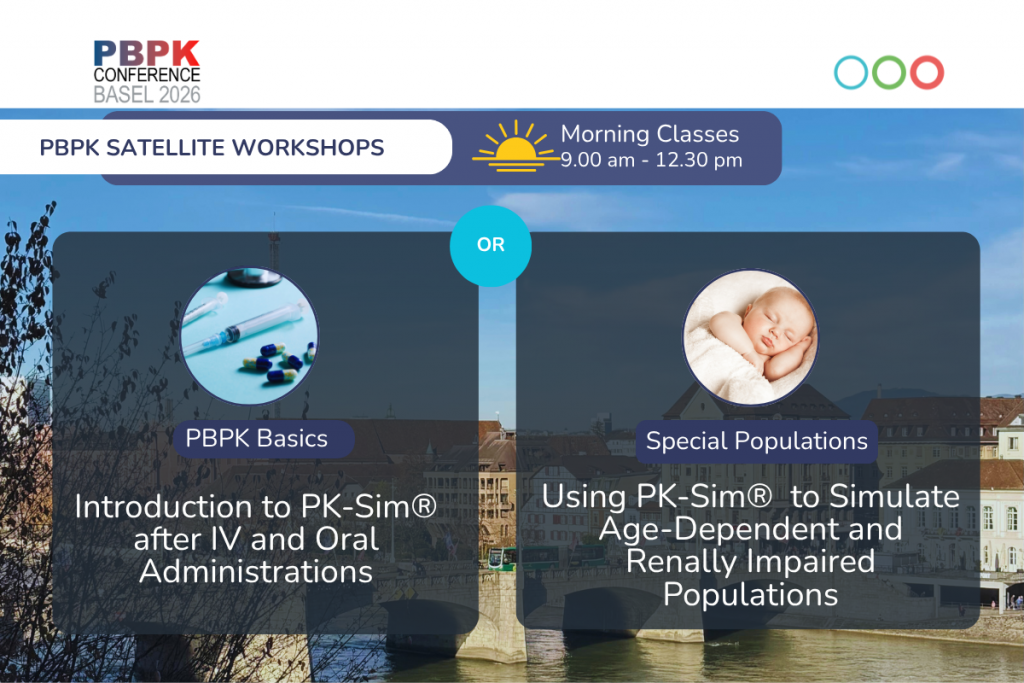
Morning Workshops at the International PBPK Conference
Our Workshops at the International PBPK Conference – Morning
We are excited to present 4 satellite workshop options at the PBPK Conference in Basel.
Explore and choose one option from the workshop happening in the morning period.
Book a morning course with us and receive 40% off your afternoon class.
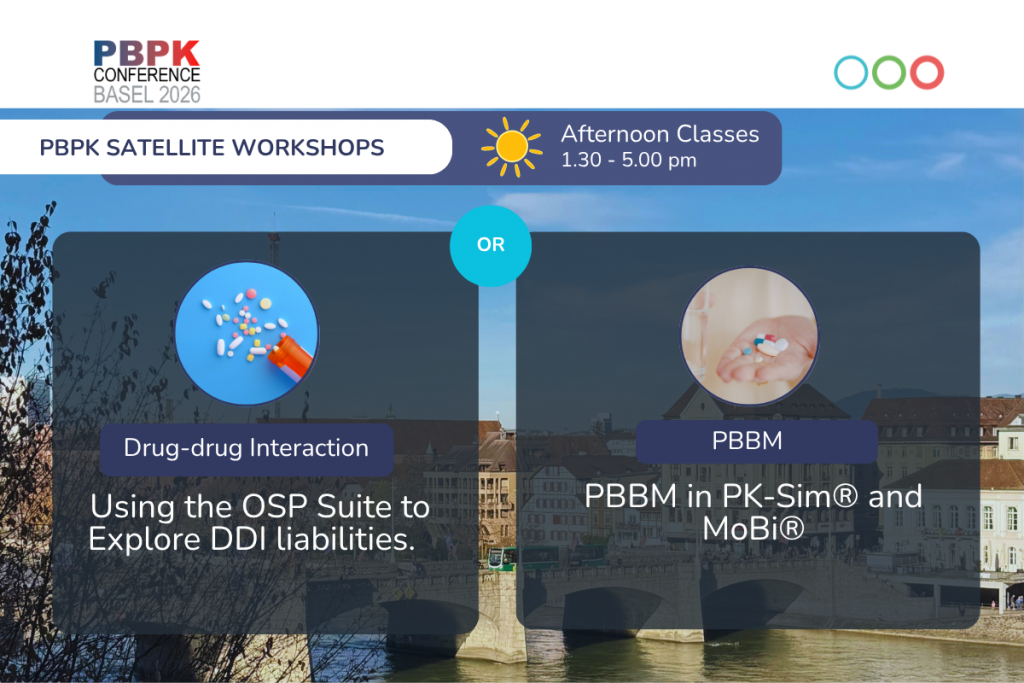
Afternoon Workshops at the International PBPK Conference
Our Workshops at the International PBPK Conference – Afternoon
We are excited to present 4 satellite workshop options at the PBPK Conference in Basel.
Explore and choose one option from the workshop happening in the afternoon period.
Book a morning course with us and receive 40% off your afternoon class.
R Workflows for advanced PBPK & QSP Modeling with {ospsuite} and {esqlabsR}
Our Workshops at PAGE 2026
We are pleased to offer four workshop options at PAGE 2026: two on June 1 and two on June 2. Explore the available sessions and choose the learning path that best fits your interests and goals!
In this full-day workshop, participants will learn how to use the R package ecosystem of the OSP Suite to carry out M&S projects in R.
Mastering PBPK with PK-Sim®: Basics to DDI.
Our Workshops at PAGE 2026
We are pleased to offer four workshop options at PAGE 2026: two on June 1 and two on June 2. Explore the available sessions and choose the learning path that best fits your interests and goals!
In this full-day workshop, participants will learn the fundamentals of PBPK modeling using PK-Sim® and how to simulate and evaluate DDI scenarios using the tool.
PBBM with PK-Sim® and MoBi®
Our Workshops at PAGE 2026
We are pleased to offer four workshop options at PAGE 2026: two on June 1 and two on June 2. Explore the available sessions and choose the learning path that best fits your interests and goals!
In this full-day workshop, participants will learn the principles and applications of physiologically based biopharmaceutics modeling (PBBM) and oral drug absorption with hands-on examples using PK-Sim®, MoBi®, the OSP-Suite, and R.
Building Scalable PBPK – QSP Models
Our Workshops at PAGE 2026
We are pleased to offer four workshop options at PAGE 2026: two on June 1 and two on June 2. Explore the available sessions and choose the learning path that best fits your interests and goals!
In this full-day workshop, participants will learn the skills to leverage modular workflows in MoBi® to build, extend, and refine PBPK-QSP models like never before.
MoBi Summer School with ESQlabs
Hands-on Training: Master MoBi v12 & the OSP Modeling Ecosystem
This 4-day immersive course combines lectures and hands-on work and is designed to take you from setup to confident, real-world model development in MoBi. From onboarding to building complete models on your own, this course is designed to boost both technical depth and modeling efficiency.
It is ideal for PBPK and QSP modelers who want to increase their confidence in working with MoBi.
Know more and register below.

