
Digital Twins for
Micro-physiological Systems: MPSlabs
Digital Twins for Microphysiological Systems: MPSlabs
Microphysiological systems (MPS) and organ-on-chips (OoC) aim to represent human physiology in vitro more appropriately than animals. Their biggest potential is the early prediction of clinical outcomes by identifying human-specific safety risks and lack of efficacy, yet they are still not routinely used in drug development.
Regulatory momentum is increasingly welcoming new approach methodologies (NAMs), including cell-based assays and computational models, alongside ongoing efforts to reduce unnecessary animal testing. At the same time, many candidates that look promising preclinically still fail to translate clinically highlighting the need for more human-relevant, quantitative decision support.
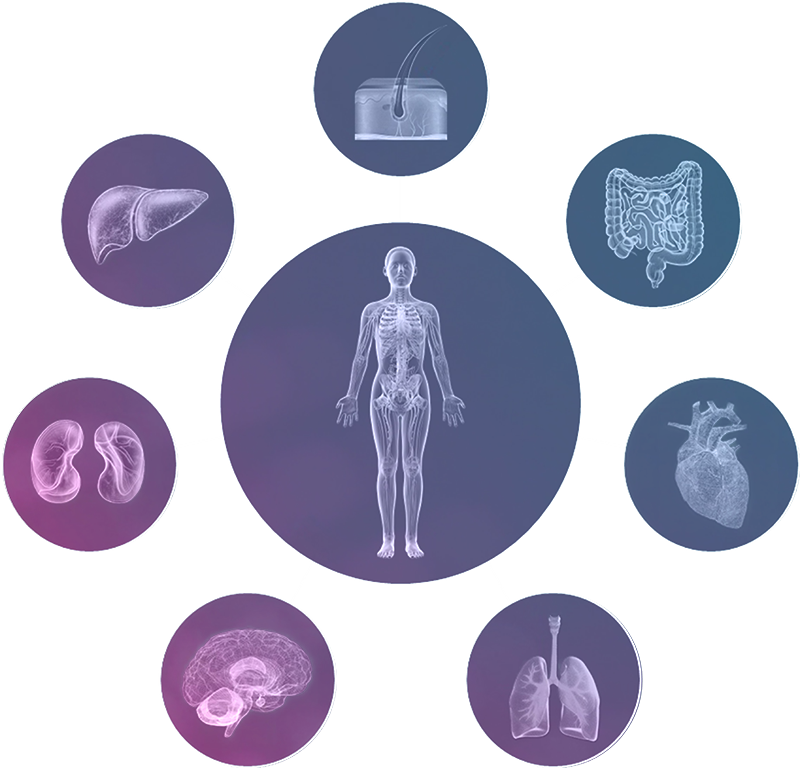
At MPSlabs, we provide a virtual testing center for microphysiological systems, organ-on-chips, and 3D organoids/spheroids. The center enables pharmaceutical, crop science, agro, and other chemical companies and operators to predict the distribution of compounds in humans precisely and accurately, without animals.
We focus on harnessing advanced in vitro systems to quantify human pharmacokinetics (ADME). We integrate quantitative data from existing MPS/OoC experiments into our digital twin platform, a modeling environment that combines hardware specifications, physiological processes, and compound-specific properties to simulate in vitro and in vivo behaviors. Rather than developing or running physical chips ourselves, we translate MPS outputs into predictive, human-relevant insights by mapping biological processes onto mathematical equations. This enables us to estimate ADME-related parameters, optimize experimental designs, and classify compounds for toxicity or efficacy.
A recent focus also includes applying AI/ML to multi-omics data such as genomic fingerprints from patient-derived tumor organoids (PDOs) to prioritize candidates for downstream wet-lab validation in collaboration with experimental partners.
As a dedicated business unit of ESQlabs, our results support improved translational and predictive accuracy of MPS/OoC as alternatives to animal in vivo models.
What we can offer
At MPSlabs, we’ve distilled our capabilities into three complementary service areas. You can leverage any one of them independently, or combine them into a fully integrated solution tailored to your specific goals, data availability, and workflow.
Operational Design
We help you plan and structure MPS/OoC studies so they generate quantitative, decision-ready data. This includes optimizing set-ups and sampling strategies, defining the context-of-use, and building cost- and time-efficient study plans that support robust interpretation and downstream modeling.
Digital Twin Integration
We integrate your MPS/OoC readouts into our digital twin framework by combining experimental outputs with system specifications, physiological processes, and compound properties. This enables translation toward human PK/ADME, supports scenario simulations (e.g., drug–drug interactions or special populations), and strengthens confidence in exposure- and safety-relevant decisions.
Predictive AI/ML Insights
When multi-omics or organoid-derived data are available, we apply AI/ML approaches in combination with digital twin outputs to extract predictive signals early. This supports prioritization of candidates, earlier identification of potential toxic liabilities, and more patient-specific predictions for precision medicine use cases.
Whether you choose a single focus area or engage all three, our mission remains the same: to push boundaries in MPS/OoC research, empower data-driven innovation, and ultimately help replace animal testing through more human-relevant models.
Our Virtual Testing Center
MPSlabs offers the world-first Virtual Testing Center for microphysiological systems, organ-on-chips, and 3D organoids/spheroids. The center enables chip manufacturers and operators to predict the distribution of compounds precisely and accurately in humans – all without animals.



Related publications and initatives
Meet the Team

Anna Sommer
Anna joins us as a Data Scientist, bringing a diverse scientific background. She holds a Bachelor’s in Biology from the University of Osnabrück, a Master’s in Molecular Biomedicine from Madrid, and a second Master’s in Bioinformatics & Biostatistics: a combination that reflects her passion for working at the interface of biomedicine and computational biology.
During her Master’s thesis at the Spanish National Center for Cardiovascular Research, Anna discovered her love for bioinformatic tools and data analysis. She then went on to gain valuable experience as a scientific trainee at the European Commission’s Joint Research Centre in Ispra, Italy, where she contributed to the Disease Prevention Unit’s Cancer Information Group.
At MPSLabs, Anna supports our projects by analyzing PK and omics data and seeks to deepen her expertise in PK modeling and AI/ML approaches for drug development decision-making.

Behnam Amiri
Behnam Amiri is one of our MPSlabs scientists working at the intersection of computational modeling and Organ-on-Chip (OoC) systems.
His work focuses on developing quantitative modeling workflows that integrate experimental data from OoC and Microphysiological Systems (MPS) into predictive models for drug development. Behnam is tackling a major challenge in pharmacology and toxicology: improving preclinical predictions while reducing reliance on animal testing. His research ensures that OoC models capture key pharmacokinetic, pharmacodynamic, and toxicological processes, making them more translatable to human biology.
By developing digital twins of OoC/MPS systems, he enables optimization of experimental design and better interpretation of OoC data, ultimately improving how we translate in vitro findings to in vivo outcomes.
His work is pushing the boundaries of computational modeling in drug development, making the process more efficient and predictive.

Christian Maass
Christian Maass is a physicist and computational biologist with over eight years of academic and industrial experience, where he established a strong national and international network. He is passionate about the integration of computational modeling and biological experiments for translational pharmacology applications.
Before joining ESQlabs, Christian Maass worked in various therapeutic areas, e.g. neurodegenerative, inflammatory, and metabolic diseases (Alzheimer, rheumatoid arthritis, NASH/NAFLD). Among others, he developed individualized PBPK models for molecular radiotherapy (leukemia), automated workflows for big data (*omics), network-based analysis of inflammation diseases, and mechanistic modeling of organ-on-chip data.
He received his Master in Medical Physics from the University College London in 2012 and PhD from the University of Heidelberg in 2015. As a postdoctoral researcher at the Massachusetts Institute of Technology (MIT), Cambridge, MA, USA, he focused on application-driven method development for microphysiological systems in safety pharmacology. In 2018, Christian Maass joined Certara’s Quantitative Systems Pharmacology (QSP) team, working on liver disease models and leading projects to integrate organ-on-chip (OoC) and computational modeling for translational pharmacology applications.
- Studying metabolism with multiorgan chips: new tools for diseasemodelling, pharmacokinetics and pharmacodynamics
- Considering developmental neurotoxicity in vitro data forhuman health risk assessment using physiologicallybased kinetic modeling: deltamethrin case study
- Considering developmental neurotoxicity in vitro data for human health risk assessment using physiologically-based kinetic modeling: deltamethrin case study
- Dependence of treatment planning accuracy in peptide receptor radionuclide therapy on the sampling schedule
- Physiologically Based Pharmacokinetic Modeling Is Essential in 90Y-Labeled Anti-CD66 Radioimmunotherapy
- Establishing quasi-steady state operations of microphysiological systems (MPS) using tissue-specific metabolic dependencies
- Multi-functional scaling methodology for translational pharmacokinetic and pharmacodynamic applications using integrated microphysiological systems (MPS)
- Translational Assessment of Drug-Induced Proximal Tubule Injury Using a Kidney Microphysiological System
- Modelling human liver fibrosis in the context of non-alcoholic steatohepatitis using a microphysiological system
- A systematic review of kidney-on-a-chip-based models to study human renal (patho-)physiology
Cleo Demeester
Cleo studied Bio-Pharmaceutical Sciences at Leiden University in the Netherlands. Afterwards, she started her PhD research at Bayer in collaboration with KU Leuven, as part of the Marie Curie project AGePOP. Her work focuses on the applicability of PBPK modelling for older adults and adults with obesity. At ESQlabs, she integrates PBPK modelling in the MPSlabs team.
Hanna Leithner
Hanna has a B.Sc. in Molecular Biology. Her thesis, “Computational Analysis of Pyrazoloquinolinones as Ligands for GABAA Receptors,” introduced her to the intersection of molecular systems and computation.
In her M.Sc. in Drug Discovery and Development, she focused on computational drug discovery and machine learning. Her research has included projects on machine learning–enhanced docking and covalent docking, as well as a master’s thesis investigating structural alerts for reactive metabolite–associated toxicity prediction. At ESQlabs, she is integrating the MPSlabs team.
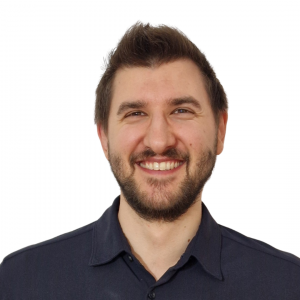
Jure Fabjan
Jure holds a PhD in Neuroscience and brings valuable PostDoc experience as a Data Scientist in Toxicology. His work is dedicated to advancing Next-Generation Risk Assessment methodologies by leveraging big data and machine learning to bridge the gap between in vitro and in vivo results.
A key focus of his research is reducing the reliance on animal testing in toxicology, leading to more ethical and efficient approaches in the field.
He is particularly excited to apply his expertise to Microphysiological Systems (MPS) and Organ-on-a-Chip (OoC) data, driving innovation in personalized medicine and oncology.
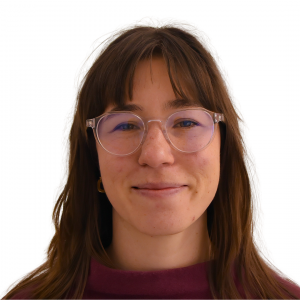
Susana Proença
Susana Proença is a biologist and toxicologist dedicated to the leveraging in vitro and in silico data for parameterizing PBPK models and to perform chemical safety assessment. She is focused on developing frameworks and case-studies for IVIVE, extrapolation of ADME properties from in vitro to in vivo, and on QIVIVE, extrapolating in vitro effect concentrations to in vivo doses. She has experience in working with PBPK models both in OSP and in R.
Before joining ESQlabs, she worked at Wageningen University, Toxicology division under Dr. Nynke Kramer supervision. There she worked on evaluating in vitro kinetics of chemical related to different toxicological ontologies (such as cholestasis and development neurotoxicity) and developing strategies for performing QIVIVE for these chemicals. Before this she underwent an internship at ECVAM-JRC on in silico modelling of in vitro kinetics, which was followed by a stint automating chemical data curation from REACH dossiers, also in JRC.
Susana obtained her Master’s degree in Bio-Pharmaceutical Sciences from Faculty of Pharmaceutical Sciences, Lisbon University (Portugal). For her PhD thesis, she studied the in vitro kinetics in complex in vitro models and (Q)IVIVE of highly lipophilic chemicals. The thesis was supervised by Dr. Nynke Kramer at the Institute for Risk Assessment Sciences at Utrecht University. The work was multidisciplinary, envolving setting in vitro experiments, analytical methods, transcriptomics analysis and in silico modelling. Her PhD thesis will be submitted soon.
- Workshop Report no.40 – Chronos and Kairos: Understanding time in biology for NGRA
- Application of High-Throughput PBPK Modeling to Develop an IVIVE Approach for Oral Permeability
- Effective exposure of chemicals in in vitro cell systems: A review of chemical distribution models
- Harnessing Open-Source Solutions: Insights From the FirstOpen Systems Pharmacology (OSP) Community Conference
- Harnessing Open-Source Solutions: Insights From the First Open Systems Pharmacology (OSP) Community Conference
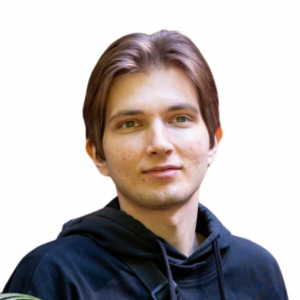
Timofei Kondratev
Tim Kondratev, or Tim, has joined our team as a Senior Graph Data Engineer.
He started his career as a software engineer in robotics, working across hardware, software, and simulation development. He later dedicated himself to graphs and data visualizations, a long-standing passion of his.
Tim has contributed to the design and development of interactive graph visualizations for large platforms and participated in research exploring how vulnerabilities spread across software dependencies. He has also built and managed large graph databases.