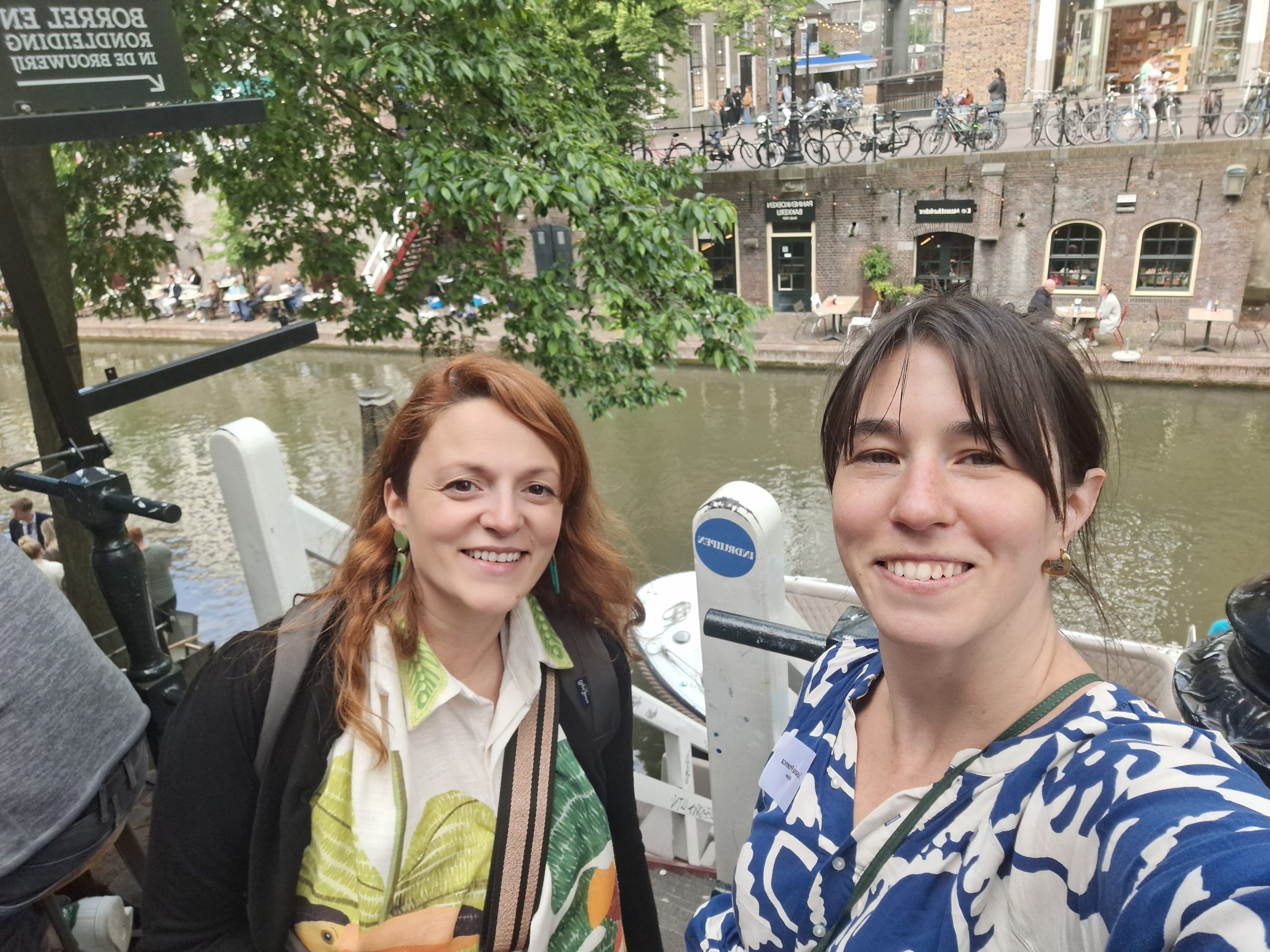
Last week, our colleagues Dr. Stella Fragki and Dr. Susana Proença attended the international workshop on QIVIVE (Quantitative In Vitro to In Vivo Extrapolation), representing our ESQlabs team. The workshop was hosted by the Dutch National Institute for Public Health and the Environment (RIVM) in Utrecht. Here are some of their key takeaways and highlights.
It was a great experience to connect with experts from different countries and engage in discussions centered on one shared ambition: advancing the implementation of Next Generation Risk Assessment (NGRA). Many thanks to RIVM for bringing this community together and creating the space for such open, and constructive discussions.
The discussions highlighted the central role of toxicokinetics, toxicokinetic modeling, and analytical measurements in facilitating the bridge between in vitro effect data and human exposure.
A few highlights:
- The importance of high-quality analytical measurements of in vitro kinetics to enable more accurate QIVIVE
- The key role of physiologically based kinetic (PBK) modeling in translating in vitro effect data into equivalent external doses
- There is consensus on the need for tiers in NGRA, but uncertainty about what the tiers should include and what should trigger a move to a higher tier.
- Well-designed in vitro experiments that clarify the level of reversibility and hazard accumulation can reduce uncertainty from short to long exposures, and from in vitro to in vivo models
- The importance of making in vitro ADME data a regulatory requirement but also the challenges of doing it without specific OECD test guidelines
- The value of joining forces across industry, regulators, and academia in a truly collaborative way, combined with the genuine energy and commitment within this community to turn NGRA into everyday practice.
At ESQlabs NGRA team, we are deeply involved in many of the topics discussed. From developing PBK models at different levels of complexity and developing and evaluating models of in vitro kinetics, to applying probabilistic reverse dosimetry approaches.
We have also been working on important questions around biological surrogacy, such as how in vitro systems can be related to in vivo compartments, as well as on the selection and interpretation of relevant dose metrics, including Cmax, AUC, and others.
Got any NGRA-related questions? Don’t hesitate to reach out.