
Last week, the MPS World Summit took place at the Walter E. Washington Convention Center in Washington, DC, from May 26–29, 2026.
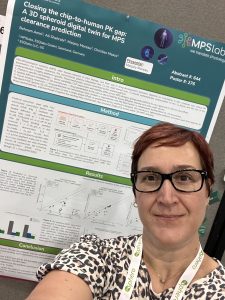
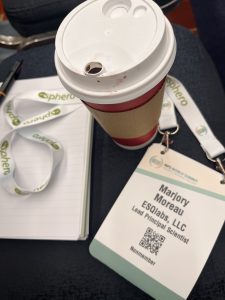
Our MPSlabs team had a poster accepted for presentation. Since our US-based NGRA Lead, Marjory, was already on site, she kindly offered to present Benham's poster on his behalf.
Following the event, Marjory shared her reflections on the meeting from the perspective of a PBPK modeler. Her observations highlight emerging trends in the MPS field and offer a valuable perspective on the intersection between MPS and PBPK approaches. Her insights are well worth reading:
“I just got back from the MPS World Summit, and I’m still buzzing. It was my first time at this conference, and as a PBPK modeler stepping into a room full of microphysiological systems (MPS) scientists, I wasn’t entirely sure what to expect. What I found was a community working on exactly the kind of problem I care about most: making in-vitro data say something meaningful about real human beings, just from the opposite side of the bridge.
My world is physiologically based pharmacokinetic modeling. I spend my time describing how a compound moves through the body: blood flows, tissue partitioning, clearance, and the whole-body picture. The strength of PBPK is context. Its weakness is that the parameters feeding the model have traditionally leaned heavily on animal data or on simplified in-vitro systems that don’t always reflect human biology. MPS sits on the other side of that gap. Organ-chips, spheroids, and microfluidic tissue models offer genuinely human-relevant biology, human metabolism, human barriers, and human transporters.
The reason I was there in the first place was to present our poster, “Closing the chip-to-human PK gap: a 3D spheroid digital twin for MPS clearance prediction”, and the conversations it sparked were a highlight of the trip. The work tackles a frustrating but well-known problem: the clearance you measure on an organ-chip is often far lower than what you actually see in humans, sometimes by close to an order of magnitude. We show that this “chip-to-human gap” isn’t a mysterious factor. It breaks down into three understandable pieces: the drug can’t always reach cells in the middle of a 3D tissue; some of it gets absorbed and retained within the tissue rather than being metabolized; and each chip platform has its own biological fingerprint. Adding a small correction for each shrinks the gap dramatically and brings predictions across very different chip designs into the same ballpark as real human data.
But the most energizing part was simply seeing the breadth of in-vitro platforms on display. Blood-brain barrier models, gut and liver systems, lung-on-chip, spheroids, and organoids of every flavor. The pace of innovation on the biology side is remarkable, and it has given me a long list of ideas for where modeling could add value. Coming in as an outsider to MPS, I left with a much richer sense of what data these systems can actually produce, which is the first thing any modeler needs to know.
One of the genuine highlights was Dr. Nicole Kleinstreuer’s keynote. She’s one of the most influential voices in new approach methodologies, now NIH Deputy Director for Program Coordination, Planning, and Strategic Initiatives, and previously Director of NICEATM, Executive Director of ICCVAM, and the US National Co-Coordinator for the OECD Test Guidelines Program. Hearing someone with that vantage point speak to where human-relevant methods are heading, and the regulatory and scientific momentum behind them, was a reminder of why this work matters beyond any single model or chip. It put the whole conference in context: we’re not just building clever tools, we’re building the evidence base for a more human-relevant, less animal-dependent science.
I came to the MPS World Summit a slightly nervous first-timer from a neighboring discipline, and I left convinced that PBPK modelers and MPS scientists need to be in the same room far more often. The chip-to-human gap is real, but it’s exactly the kind of gap that modeling is built to close, and the biology side is producing better and better data to model. If that’s not a recipe for collaboration, I don’t know what is.
If you stopped by our poster, thank you. I loved the conversations, and I’d be glad to keep them going.”
If, like Marjorie, you're interested in exploring the connection between Organ-on-a-Chip (OoC) technologies and PBPK modeling, we'd be happy to continue the conversation. The ESQlabs and MPSlabs teams are actively working at this interface and are always keen to discuss new ideas, collaborations, and applications.
Feel free to get in touch with us; we'd love to hear from you.


